A reflective essay on the scholarly environment of Bukhara that nurtured Ibn Sina, the understanding of knowledge and wisdom in Islamic civilization, and its scientific heritage spanning over a thousand years.
August 15-21 Ibn Sina Week is an important occasion to rethink Ibn Sina, one of the names that transcends centuries in the Turkish-Islamic science and thought tradition, and the great scientific heritage he represents. About a thousand years ago, near Bukhara, the curiosity of a child growing up among books turned into a great scientific journey extending from medicine to philosophy, from logic to mathematics. The works he wrote transcended cities, languages, and centuries, finding their place in the collective memory of humanity. Today, remembering Ibn Sina signifies more than just commemorating a great scholar of the past. It calls us to reconsider the scientific environment that nurtured him, the connection between knowledge and truth and goodness, and the people upon whom a civilization's future was built.
A thousand years ago, reaching knowledge was a long journey. One would cross cities in pursuit of a book, spend years studying a subject under a teacher, and a work would be copied line by line with ink.
Today, the world's largest libraries fit on a screen. Research that once took months can now be done in seconds.Artificial intelligence, is reshaping the relationship we have with the knowledge accumulated by humanity over the centuries.
The screen has come alongside paper, and pixels have come alongside ink. The path of knowledge has shortened, and its speed has increased. However, the fundamental question before humanity has not changed:
What does knowing mean for a human?
The scientific journey of Ibn Sina, who grew up in Maveraünnehir, brings us back to this question today.
Because in his world, science was a path beyond the accumulated information in the human mind: a path to understanding humanity, nature, and existence; to pursuing the truth and seeking what is good for humanity.
The possibilities of knowledge have increased, but the human need to seek the truth has never diminished. Ibn Sina's scientific legacy reminds us of this most of all today.
Who is Ibn Sina?
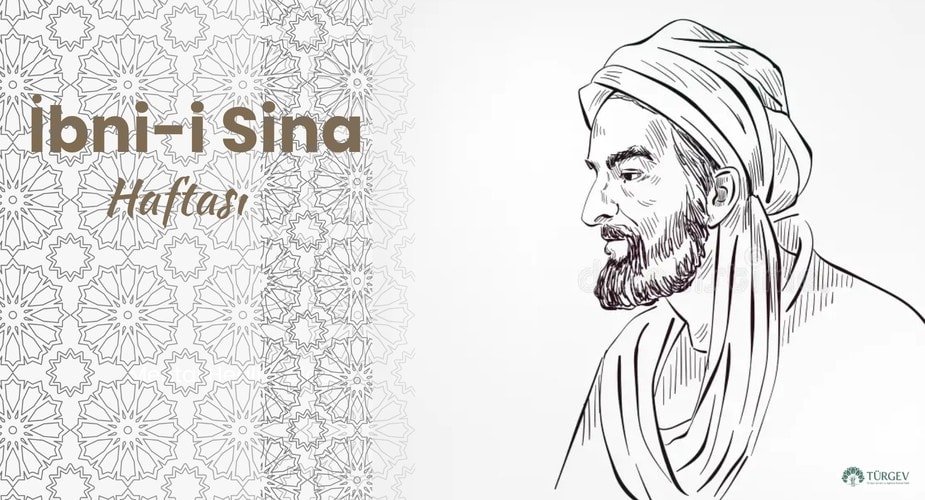
Ibn Sina was born around 980 in Efshana, near Bukhara, one of the important centers of science and culture of his time. In the Western world, he is known as Avicenna, while in the Islamic world, he is recognized by the title "al-Shaykh al-Ra'is," meaning the chief of scholars.
Much of what we know about his early years is based on his life story narrated by his student Abu Ubaid al-Juzjani.
This story also carries striking traces of how a civilization raises its children.
Ibn Sina memorized the Quran at the age of ten. He was introduced to Islamic sciences, language, and literature. He then turned to logic, mathematics, natural sciences, and philosophy. Later, he deepened his knowledge in medicine.
The learning journey of a child from the Quran to mathematics, from language to logic, from jurisprudence to medicine also reflects the breadth of the scientific world that nurtured him.
Perhaps this is what should be emphasized.
To understand Ibn Sina, one must also look at Bukhara, where he was raised. Because civilizations do not accidentally nurture great names.
How does a city raise scholars?
Bukhara, where Ibn Sina spent his childhood, was one of the important cultural and scientific centers of the Islamic world during his time.
A place where books were valued, different sciences were taught, and teachers and students came together...
In Ibn Sina's life story, we see traces of encounters with books, teachers, and different fields of thought.
Of course, a person can be born talented; however, what they will become is often determined by the environment in which they were raised.
The books placed before a child, the questions they dare to ask, the people they converse with, the mentors they grow up with, and how much value their society places on knowledge shape their world.
For this reason, Ibn Sina's story is more than just the story of a genius. It is the story of a civilization that can raise knowledgeable individuals.
When does knowledge turn into wisdom?
Today, we often use the words "knowledge," "science," and "wisdom" interchangeably.
However, there is a significant distance between them.
Knowledge can multiply. A person can learn many things, access numerous books and sources. Science requires understanding the methods of knowing and deepening in the pursuit of truth. Wisdom, on the other hand, requires thinking about the meaning of what is known, its place, and the direction it leads a person... And it asks a greater question of humanity:
What is the meaning of what you know, and what will you do with it?
In Ibn Sina's understanding of science, knowing was a path that led a person to truth and goodness. According to him, the goal of theoretical sciences was to reach the truth, while the goal of practical sciences was to attain knowledge of the good.
Truth and goodness...
Centuries have passed. The ways to reach knowledge have expanded, and its possibilities have increased. However, the human desire to seek truth and uphold goodness has not diminished.
Today, technology shows us more and more of what we can do every day. The question of what a person should do still requires thought, ethics, conscience, and wisdom.
Thinking without fragmenting the human
To recognize Ibn Sina merely as a great physician is insufficient.
He thought about the soul while researching the human body. He did not abandon logic while engaging with medicine. He did not neglect metaphysics while studying mathematics. He also addressed ethics, human perfection, and happiness as issues within the same realm of thought.
In Ibn Sina's world, a human was not seen as merely a body. The mind, soul, ethics, perfection, and happiness of a person were all considered within the same whole. Understanding a person required seeing all these aspects without separating them.
Today, we can see the smallest cell of the human body and look into the depths of the sky that we could not reach before. We are specializing more in every field.
However, as the fields of knowledge increase, it becomes more challenging to see a person as a whole.
Ibn Sina's intellectual legacy leaves us face to face with that ancient question:
We know more about humans; but can we understand humans better?
A civilization's perspective on knowledge is most evident here. It is as much about the knowledge it produces as it is about the place it opens for humanity within that knowledge.
The journey of Al-Qanun fi al-Tibb from Bukhara to Europe
One of Ibn Sina's most important works is Al-Qanun fi al-Tibb, or The Canon of Medicine.
The work systematically addressed medical knowledge. It covered a wide range from diseases to treatment methods, from medicines to health preservation.
However, there is another journey that makes the story of Al-Qanun even more valuable from the perspective of civilization history.
The work was translated into Latin, reached the centers of science in Europe, and became one of the important reference sources for medical studies for centuries. A work penned by a scholar raised near Bukhara transformed into a part of humanity's common heritage by passing into other languages and geographies.
No civilization starts knowledge from a blank page. It reads, translates, discusses, reduces, and multiplies what has been left by its predecessors. Then it speaks its own word and leaves the trust to those who come after.
The Islamic civilization preserved the knowledge it received, reflected on it, critiqued it, developed it, and multiplied it with new works. Al-Qanun established a centuries-long connection between the knowledge accumulated before it and those who would come after.
In Ibn Sina's Kitab al-Shifa, the entirety of sciences
Ibn Sina's other great work is Kitab al-Shifa.
Due to the word "shifa" in its name, it may be thought of as a medical book. However, Shifa is a vast collection of philosophy and science that brings together logic, natural sciences, mathematics, and metaphysics.
There is a reason for the coexistence of such different sciences on the pages of the same work. In Ibn Sina's world, sciences were intertwined; each opened another path to understanding the truth.
Deepening in one science did not require losing sight of the whole. On the contrary, depth brought a person closer to the truth without distancing them from the whole.
A thousand-year reunion from Bukhara to Istanbul
The story of the books opened before a young man in Bukhara a thousand years ago continues today in Istanbul.
The Süleymaniye Manuscript Library in Istanbul preserves one of the world's most important manuscript collections of Ibn Sina's works.
The collection, which is listed in the UNESCO Memory of the World register, contains approximately 600 manuscript copies of Ibn Sina's works. Among these, there are 263 different work titles. Some copies date back to the 11th century.
Once, works copied line by line with pens dipped in ink...
Knowledge transported from a teacher to a student, from one city to another, from one century to the next...
Today, a thousand-year memory lives on the shelves of Süleymaniye. The same works are now being read again in seconds under the light of screens.
The tools for reaching knowledge have transformed. The question before humanity remains:
What will we do with all this knowledge?
Is it enough to boast about the great names of the past?
It is easy to commemorate Ibn Sina.
It is also valuable to name schools, hospitals, and libraries after him.
However, the relationship a civilization establishes with its great names should be deeper than this.
The real issue is to understand what kind of world could nurture Ibn Sina before memorizing the date of his birth: which family, which teacher, which book, which city, which understanding of science, and which curiosity transformed him into the Ibn Sina we know today.
If we only make the great names of the past a source of pride, we leave their legacy in history.
The memory of civilization is to transform what is inherited from the past into the voice of its own time.
Today's main issue is to create environments where new minds can emerge that can face the questions of their time, know their roots, and have an open horizon to the world, rather than merely imitating a new Ibn Sina.
The thirty-year understanding of nurturing humans of TÜRGEV
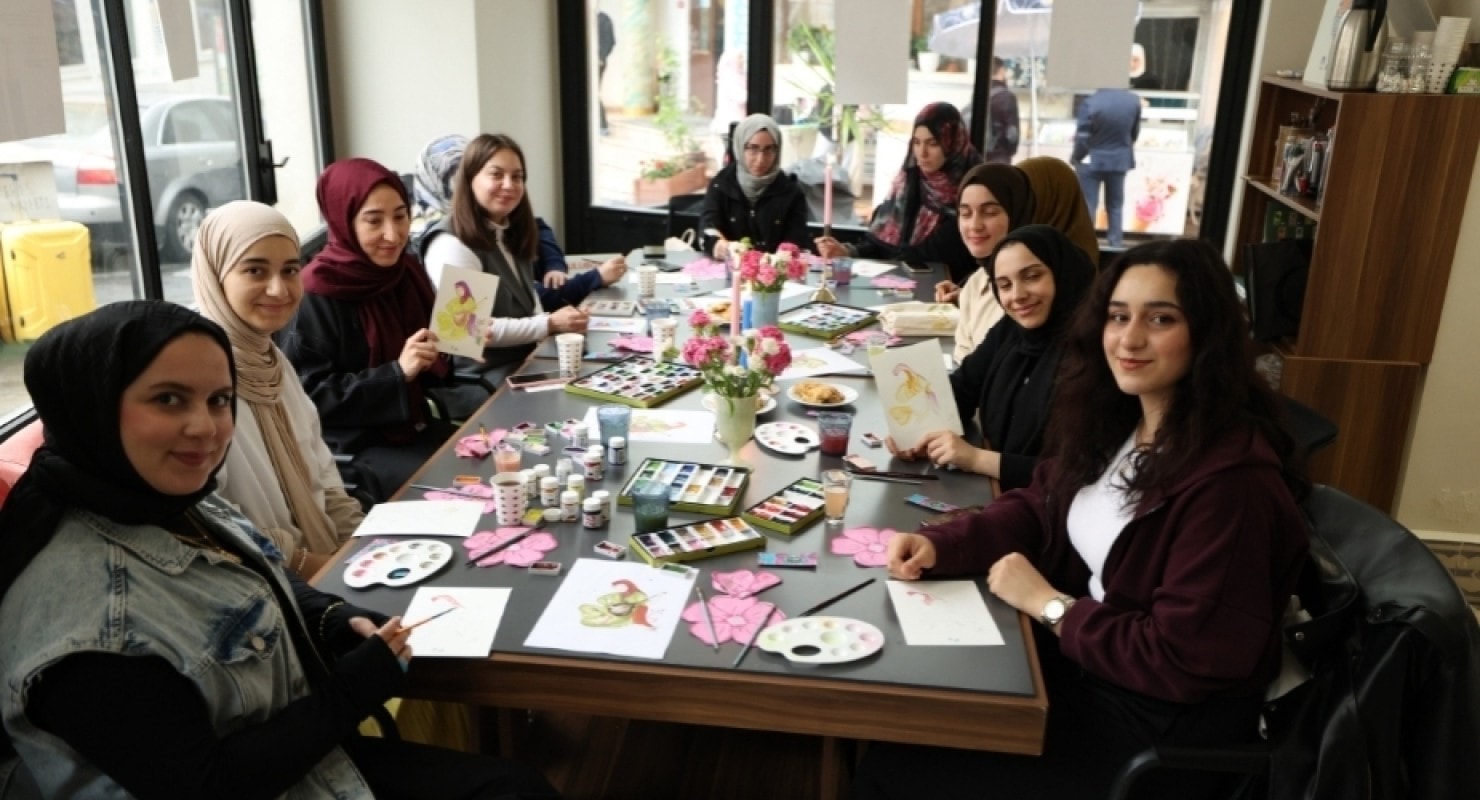
What we have been trying to establish for thirty years as TÜRGEV is exactly such an environment. While accompanying our young girls' educational journeys, we know that the issue is not just about providing them with knowledge and opportunities.
The environment in which a young girl is raised, the people she walks with, the books she encounters, the questions she dares to ask, and the horizons opened to her are also part of education.
For this reason, we value our young girls' recognition of their own civilizational heritage, understanding the world, equipping themselves with the knowledge and skills of the age, and gaining the intellectual confidence to express their own thoughts.
Today's youth are growing up in a time very different from Ibn Sina's world.
Artificial intelligence is redefining the relationship between humans and knowledge. Biotechnology is opening discussions about the limits of life. The digital world is eliminating distances while bringing back the quest for human loneliness, belonging, and meaning.
Providing more knowledge to the youth of this age will not be enough.
Alongside knowledge, direction, responsibility alongside ability, ethics alongside success, and a memory of one's own civilization alongside the world's knowledge will also be necessary.
Ibn Sina's ability to knock on the doors of different sciences with the same curiosity reminds us of this. A mind that knows its own world, is curious about the world, and can express its own thoughts.
The true legacy of a civilization
Ibn Sina passed away in 1037 in Hamadan.
Over the centuries, states changed. Cities changed. The boundaries of science expanded. The way humanity reaches knowledge has completely transformed.
However, the questions pursued by that child who grew up among books near Bukhara have not aged.
What is a human?
What is knowledge?
What is truth?
What is good?
What should a human do with what they know?
Today, we preserve Ibn Sina's works on the shelves of Süleymaniye. This is a great legacy of a civilization.
However, preserving a civilization's legacy carries a responsibility that goes beyond merely safeguarding the works left from the past. It is also necessary to create environments where new minds will read, understand, discuss, and express their own thoughts on the questions of their time.
Perhaps the most valuable question Ibn Sina left us is this:
What kind of knowledge environment will we leave for the children of today?
The answer to this question is the responsibility of educational institutions, families, teachers, cities, and everyone who carries a vision for the future.
Because civilization is not transmitted from one generation to another solely through works.
It is transmitted through people.
Frequently Asked Questions About Ibn Sina
Where was Ibn Sina born?
Ibn Sina was born in Efshana, near Bukhara, one of the important centers of science and culture of his time. The region is now within the borders of Uzbekistan.
Was Ibn Sina Turkish?
It is historically cautious to define the 10th and 11th centuries in which Ibn Sina lived with today's concepts of nationality. He was raised in the great scientific basin of Maveraünnehir and wrote the majority of his works in Arabic, one of the main scientific languages of the Islamic world at the time. He is among the leading figures of the Turkish-Islamic science and thought tradition and, more broadly, the common scientific heritage of Islamic civilization.
Is Kitab al-Shifa a medical book?
Although it contains the word "shifa" in its name, Kitab al-Shifa is a vast collection of philosophy and science that encompasses logic, natural sciences, mathematics, and metaphysics.
Are Ibn Sina's works found in Istanbul?
Yes. The Süleymaniye Manuscript Library in Istanbul preserves one of the world's most important manuscript collections of Ibn Sina's works. The collection, which is listed in the UNESCO Memory of the World register, contains approximately 600 manuscript copies and 263 different work titles. Some copies date back to the 11th century.
Why is Ibn Sina still important today?
What makes Ibn Sina important today is not only his works in medicine and philosophy but also his holistic approach that considers humanity, knowledge, and existence together. In an age where knowledge is rapidly multiplying and artificial intelligence is changing our relationship with knowledge, the questions he left about the purpose of knowledge and the responsibilities of humanity towards what they know are gaining new significance.
What is Ibn Sina's most important legacy for the youth?
Ibn Sina's life reminds us to be curious and to deepen our learning. It shows that directing knowledge towards the well-being of humanity is equally valuable. One of the most important lessons from his life that has reached us today is the importance of an intellectual environment that will nurture abilities.